
Sleep Apnea Treatment in Ahwatukee, Phoenix
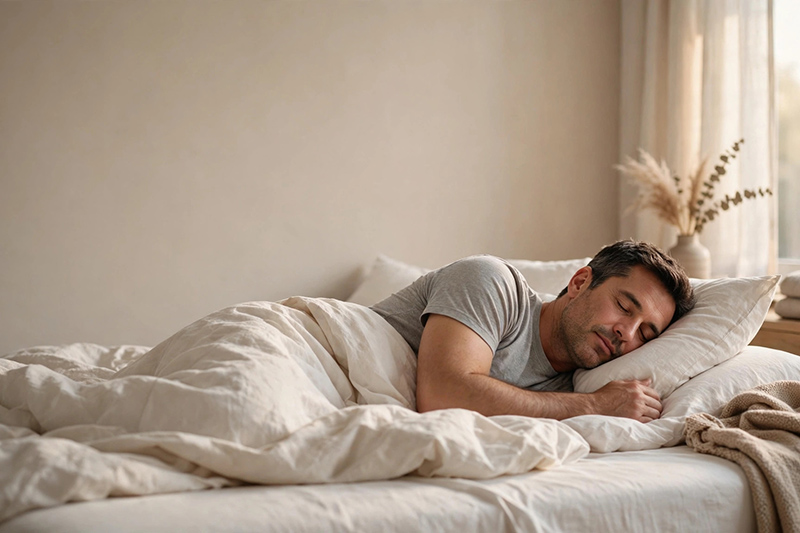
Snoring is easy to joke about. Sleep apnea isn’t.
Sleep apnea means your breathing repeatedly stops and restarts while you sleep — sometimes dozens of times an hour, all night long. Most people who have it don’t know. Their partner hears the pauses. They just know they wake up tired.
At Desert Foothills Dental, we help two kinds of patients: people who have been prescribed a CPAP machine and simply cannot sleep with it — and people who snore, wake unrefreshed, and have never been told a dental appliance could be an option. If either sounds familiar, it’s worth a conversation.
Signs you might have sleep apnea
- Loud, regular snoring
- A partner who has seen or heard your breathing pause during sleep
- Waking up with a headache or a dry mouth
- Feeling unrefreshed, foggy, or sleepy during the day despite a full night in bed
- Getting up repeatedly at night to use the bathroom
- High blood pressure that stays high despite medication
None of these proves you have sleep apnea — only a sleep study can do that. But together, they are exactly the pattern worth checking.
Why sleep apnea matters
Every breathing pause drops your blood oxygen and jolts your heart and blood pressure. Repeated night after night, that strain adds up. Sleep apnea is found in 40 to 80 percent of people with high blood pressure, heart failure, coronary artery disease, atrial fibrillation, and stroke — and most people with moderate-to-severe sleep apnea have never been diagnosed.
We won’t overstate it: research links untreated sleep apnea to these conditions, and treating apnea reliably improves sleep, alertness, and quality of life, and lowers blood pressure modestly. What no honest provider should promise is that treatment prevents heart attacks — the largest trials haven’t shown that. What we can promise is that you’ll know where you stand, and that proven treatment will be verified with a follow-up sleep test, not guesswork.
When CPAP isn’t working out
CPAP is an effective treatment — if you can sleep with it. Many people can’t. The mask leaks, the air dries them out, the machine stays in the closet, and the apnea goes untreated. Untreated apnea is the real problem. If your CPAP is gathering dust, don’t just give up on treatment — there is another guideline-supported option, and it fits in a small case on your nightstand.
A quieter option: a custom oral appliance
An oral appliance is a custom-made device, similar in size to a sports mouthguard, worn only while you sleep. It gently holds your lower jaw forward, keeping your airway open so you can breathe normally through the night. No mask, no hose, no noise.
Oral appliances are recommended by sleep medicine guidelines for adults who cannot tolerate CPAP or who prefer an alternative. They work best for mild to moderate sleep apnea, and for severe apnea when CPAP isn’t tolerated. Your appliance is prescribed by a sleep physician and fitted, adjusted, and monitored by Dr. Singh — and a follow-up sleep test confirms it is actually working.
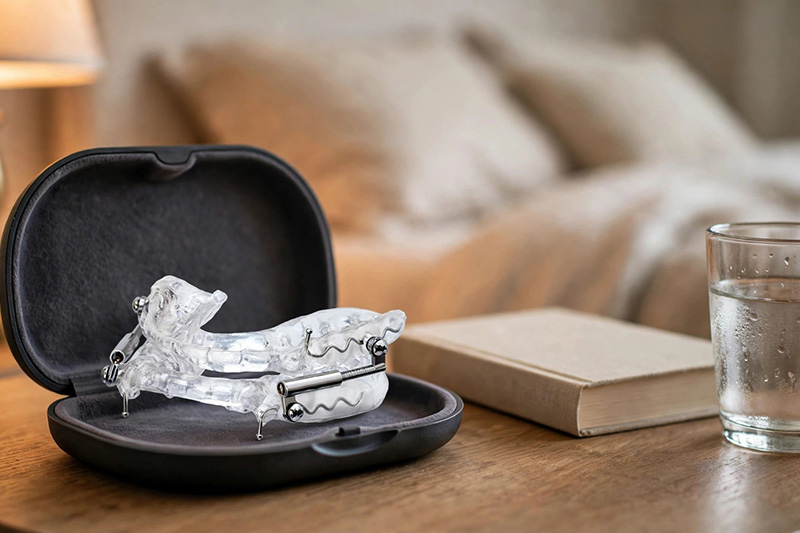
Pictured: a custom oral appliance of the type provided at Desert Foothills Dental. Every appliance is custom-made for the patient wearing it — yours may differ in design and appearance.
How treatment works at Desert Foothills Dental
- Step 1 — Consultation and screening. We start with a conversation and a screening at our office — your symptoms, your sleep, and your health history.
- Step 2 — Sleep testing. If apnea is suspected, we refer you to our sleep physician partners for a sleep study — usually a home sleep test you wear in your own bed. The physician interprets the results and makes the diagnosis.
- Step 3 — Prescription and impressions. If an oral appliance is right for you, the physician issues the prescription and treatment order, and we take precise digital impressions of your teeth.
- Step 4 — Fitting and adjustment. Your custom appliance is made to fit your mouth, and Dr. Singh fits it and adjusts it gradually over the first weeks until your airway stays open comfortably.
- Step 5 — Proof it works. You return to the sleep physician team for a follow-up sleep test with the appliance in place, to confirm it is treating your apnea — and we stay in the loop with them on your results and any adjustments.
Straight answers about our role
A dentist doesn’t diagnose sleep apnea, and we won’t pretend to. Diagnosis belongs to a physician, based on a sleep study. Our role is to spot the warning signs, get you tested, and — when an appliance is prescribed — to build it, fit it, and look after your teeth, jaw, and bite while it treats your sleep. It’s medical care delivered as a team, and we think that honesty is part of the treatment.
Frequently asked questions
How do I find out for sure whether I have sleep apnea?
Only a sleep study can diagnose it. If our screening suggests apnea, we coordinate the referral, and testing is usually done at home, in your own bed.
I already have a CPAP and I hate it. Should I just stop using it?
Please don’t stop treatment without a plan — untreated apnea is the risk. Come in first. If a physician agrees an oral appliance is appropriate for you, we can transition you to treatment you’ll actually use.
Will an oral appliance work for severe sleep apnea?
It can, particularly when CPAP isn’t tolerated — and the follow-up sleep test tells us objectively whether it’s working for you. For some patients, the physician team recommends a combination approach, and we coordinate that with them.
Does wearing an appliance hurt?
Most patients adjust within a few weeks. Some notice mild jaw stiffness or extra saliva at first. Because the appliance moves your jaw, we check your teeth and bite at follow-up visits and adjust as needed.
What does treatment cost? Does insurance cover it?
You’ll know every fee in writing before treatment begins — no surprises. Sleep apnea care involves both the sleep physician team (consultation and testing) and our office (the appliance and follow-up care), and we’ll walk you through both before you commit to anything.
Start with a conversation
If you snore, wake up tired, or have a CPAP machine you can’t sleep with, call Desert Foothills Dental at 480-460-1911 or book online. The first step is simply a screening conversation — and if you need testing or treatment, we’ll coordinate every step with the sleep physician team.
Desert Foothills Dental — 1345 E Chandler Blvd, Suite 121, Phoenix, AZ 85048.
